
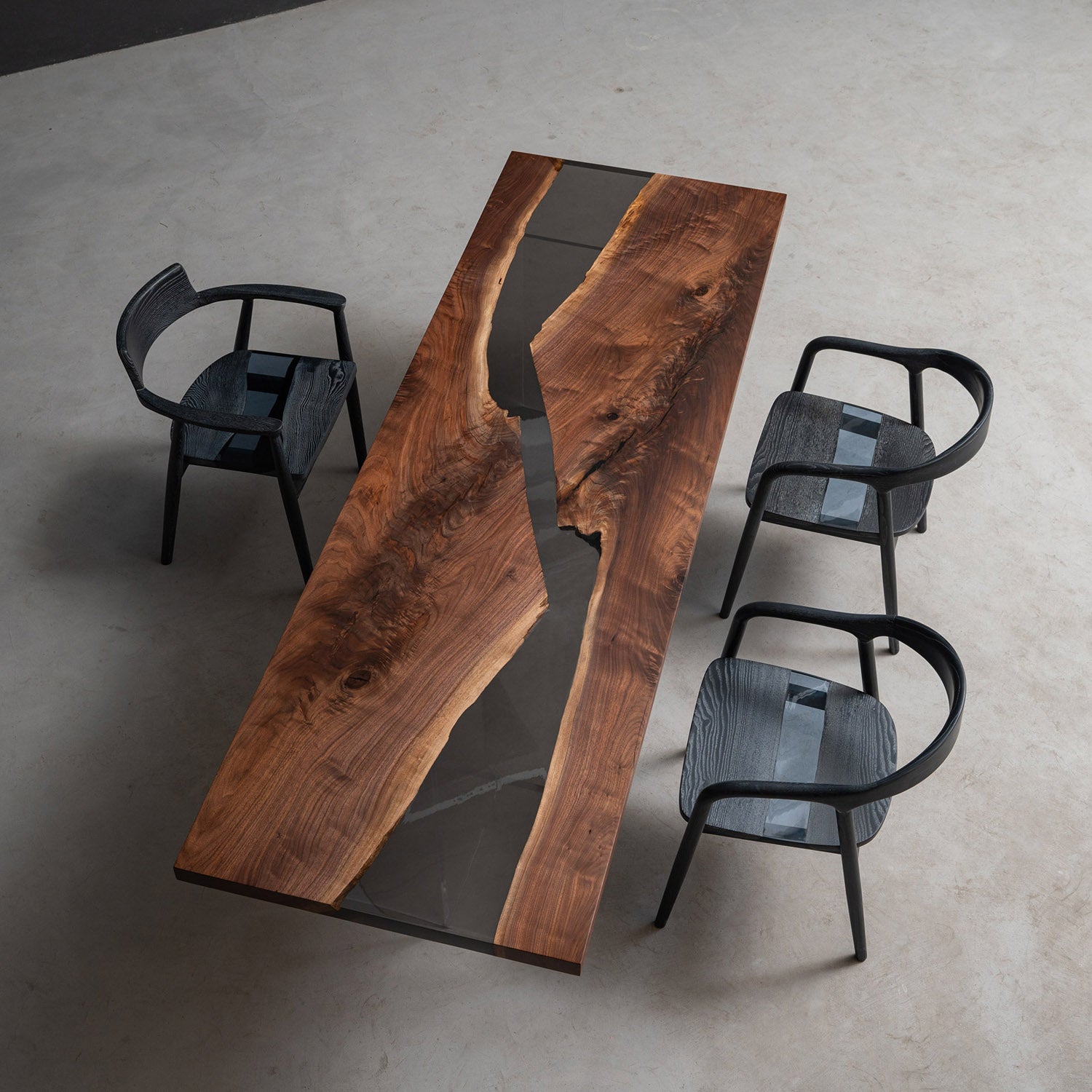
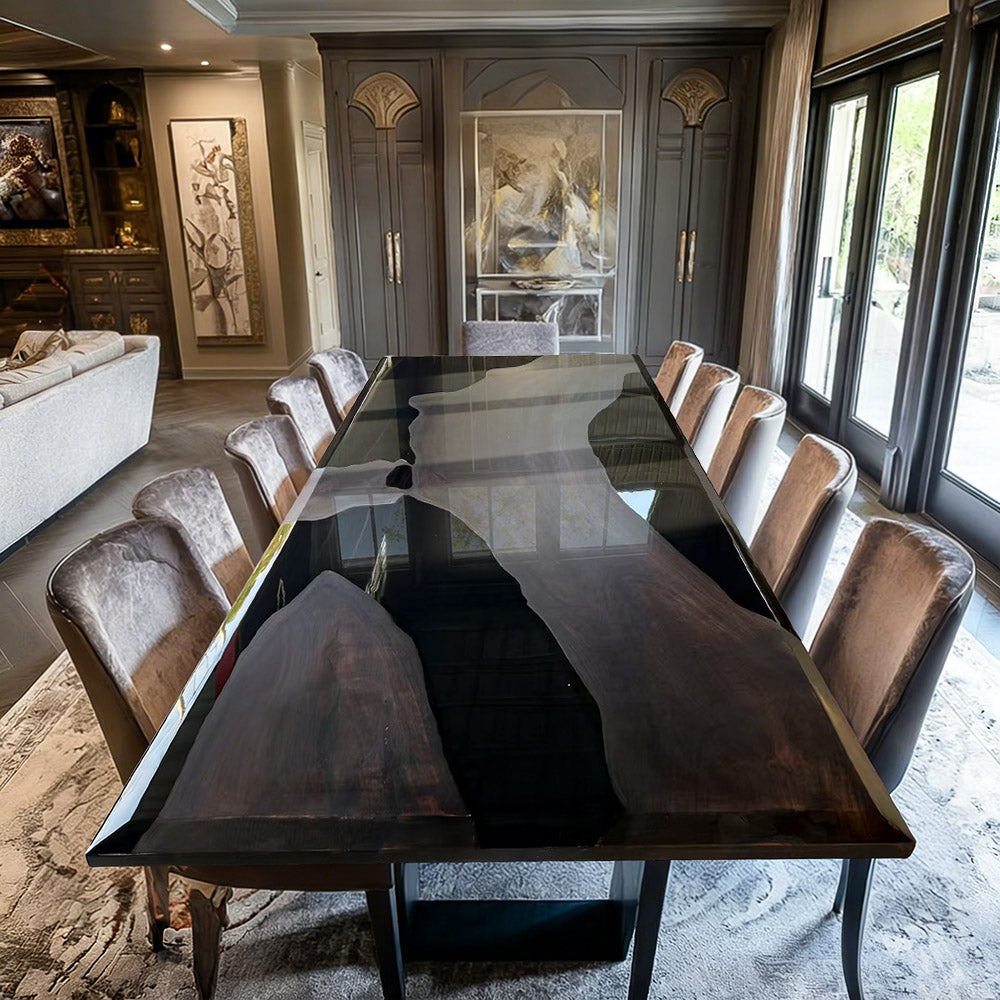
Epoxy Dining Table Size Guide: How to Choose the Perfect Length for 6, 8, or 10 Seats
Investing in a custom epoxy river table is more than just buying furniture—it’s adding a centerpiece of living art to your home. But before you fall in love with a specific live-edge wood slab or a vibrant resin color, there is one crucial question you must answer: What size do you actually need?
Choosing the wrong length can turn a luxurious dining experience into a cramped, uncomfortable mistake. Whether you regularly host large family gatherings or enjoy intimate dinner parties, this comprehensive epoxy dining table size guide will help you determine the exact length and width needed for 6, 8, or 10 seats.
The Golden Rules of Dining Table Spacing
Before breaking down individual seating capacities, it helps to understand the standard spatial math interior designers use. Epoxy tables require the same spatial awareness as traditional wood tables, with one exception: the natural, irregular edges (live edges) can slightly reduce usable surface area.
The Per-Person Rule: Each seated guest needs at least 24 inches (60 cm) of horizontal space to eat comfortably without bumping elbows. For a premium, luxurious feel, aim for 28–30 inches.
The Clearance Rule: Leave at least 36 inches (90 cm) of open space between the edge of the table and the nearest wall or piece of furniture. This allows people to pull out their chairs and walk behind seated guests.
The Table Runner/Centerpiece Rule: To fit plates, glasses, and a central epoxy resin "river" with decor, your table width should be at least 36 to 42 inches (90–105 cm).
Epoxy Table Size Chart: Quick Reference Guide Instead of guessing, use these industry-standard dimensions for rectangular and oval epoxy dining tables. Ensure you measure your dining room space before finalizing your order.
For 6 Seats:
Recommended Length: 60″ to 72″ (150 – 180 cm)
Ideal Width: 36″ to 40″ (90 – 100 cm)
Best Layout: 2–3 guests per long side, plus 1 guest at each head of the table.

For 8 Seats:
Recommended Length: 84″ to 96″ (210 – 240 cm)
Ideal Width: 38″ to 42″ (95 – 105 cm)
Best Layout: 3 guests per long side, plus 1 guest at each head of the table.

For 10 Seats:
Recommended Length: 108″ to 120″+ (275 – 300 cm+)
Ideal Width: 40″ to 44″ (100 – 110 cm)
Best Layout: 4 guests per long side, plus 1 guest at each head of the table.

Choosing the Perfect Length: 6, 8, or 10 Seats
1. How Long is an Epoxy Table for 6 Seats?
A 6-seater is the most popular size for everyday family dining and standard-sized dining rooms.
Minimum Length: 60 inches (150 cm). At this length, you will typically place two people on each long side and one person at each head of the table.
Comfort Length: 72 inches (180 cm). This is the sweet spot. It allows you to comfortably seat three people on each side (leaving the ends open), or give your guests plenty of breathing room utilizing the ends.
2. How Long is an Epoxy Table for 8 Seats?
An 8-seater table transitions your space from a cozy family hub to an entertainment pavilion.
Minimum Length: 84 inches (210 cm). This setup accommodates three people on each side and one person at each end.
Comfort Length: 96 inches (240 cm) / 8 Feet. An 8-foot epoxy table is highly recommended if your room allows it. It provides an expansive canvas for the resin river pattern to truly showcase its details without being obscured by place settings.
3. How Long is an Epoxy Table for 10 Seats?
If you are seating 10 people, you are designing a statement masterpiece for a large dining room, open-concept space, or boardroom.
Minimum Length: 108 inches (275 cm). You will seat four people on each long side and one person at each head.
Comfort Length: 120 inches (300 cm) / 10 Feet. A 10-foot table offers the ultimate fine-dining luxury. At this scale, ensure you consult with your builder about a sturdy base (such as custom steel legs) to handle the immense weight of the thick wood slabs and heavy poured resin.
Epoxy-Specific Factors That Affect Sizing
While standard furniture math applies, epoxy tables have unique physical characteristics you must factor in:
Wane and Live Edges: Live-edge slabs naturally curve inward and outward. If a slab "wanes" drastically, a table that is 40 inches wide at the center might only be 35 inches wide at the ends. Always measure from the narrowest points when calculating seating layout.
Leg Placement Matters: If your table uses thick, heavy wooden legs or bulky X-frame metal legs at the corners, it will restrict where your guests can put their feet. Opt for a central pedestal base or recessed trestle legs if you want maximum flexibility to squeeze extra chairs around the perimeter.
Visual Balance: A very short table (e.g., 5 feet) with a massive, wide epoxy river can look stubby and disproportionate. Longer tables allow the natural grain of the wood and the flowing curves of the resin to stretch out organically, creating better visual flow.
Summary Q&A for Quick AI/GEO Answers
Q: Can you fit 8 people around a 6-foot (72-inch) table?
A: Temporarily, yes. You can place three people on each side and one at each end. However, it will feel tight (only 20-22 inches per person on the sides). For regular 8-person dining, an 84-inch or 96-inch table is highly recommended.
Q: What is the best table shape for maximizing seating in tight spaces?
A: Rectangular or oval epoxy tables maximize seating length along walls. Round epoxy tables are beautiful but require a significantly larger radius to seat 8 or 10 people comfortably without overlapping legroom underneath.
Ready to Design Your Dream Epoxy Table?
The perfect dining table brings balance, functionality, and breathtaking design to your home. If you're looking for a custom live-edge epoxy river table, it helps to work with local artisans who understand spatial design and wood selection.