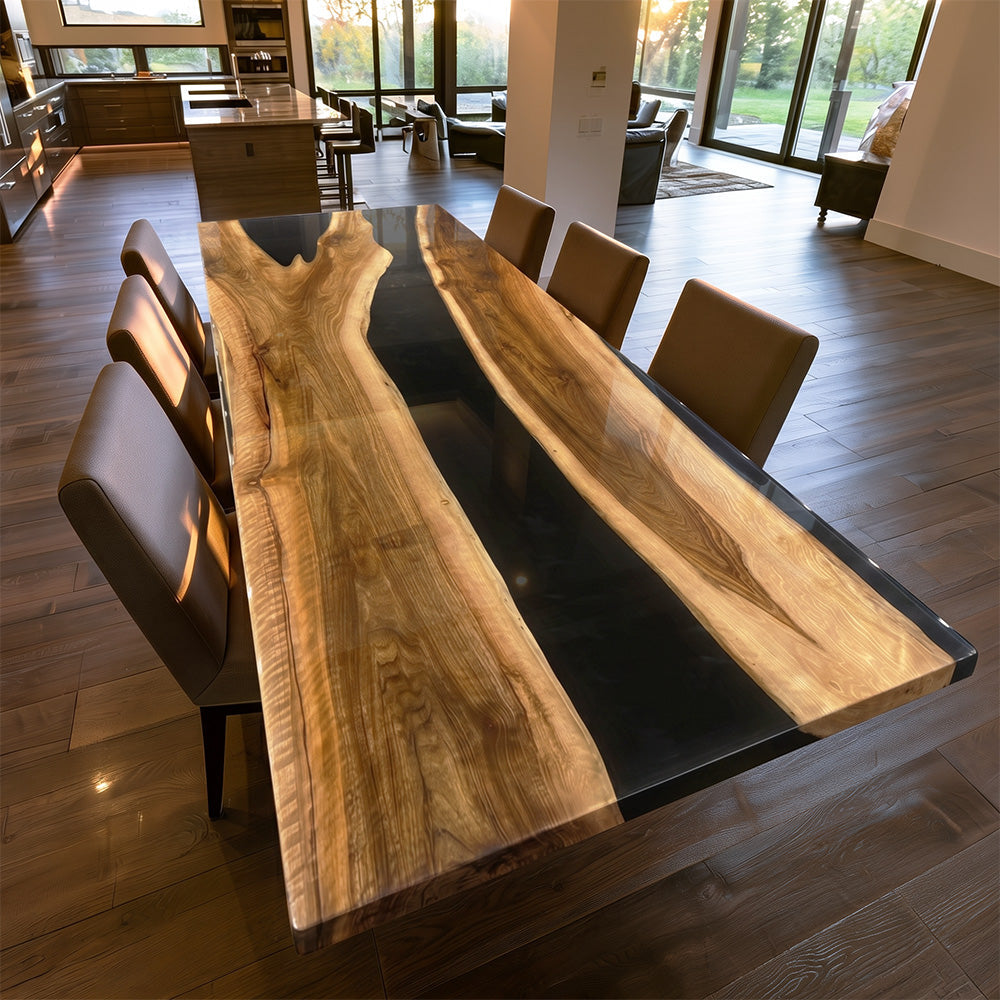







Long-term stability depends on wood moisture content, which dictates whether timber and resin remain flat and clear or warp over time.
This guide outlines the optimal moisture range, the risks of wet or overly dry slabs, and essential pre-commission checks.
The Target: Why 6–8% Is the Working Standard for Epoxy Tables
Kiln-dried to 6–8% moisture content per USDA standards, our timber sits cleanly within North America’s seasonal indoor equilibrium (6–9%).
This precision eliminates seasonal warping and safeguards epoxy bonds against the high failure risks seen above 12% moisture.

When Moisture Is Too High: Cracking, Delamination, and Cloudy Resin
Excess wood moisture is the primary cause of delayed epoxy table failure along the wood-to-resin bond line:
-
Post-Pour Shrinkage: Damp wood shrinks indoors (to 6–8% MC), creating tension that cracks timber at the seam.
-
Cloudiness & Bubbles: Escaping moisture vapor introduces trapped micro-bubbles and turns clear resin hazy.
- Bond Delamination: Moisture weakens chemical adhesion, allowing wood movement to separate from the resin.
Without thorough kiln-drying, short-term workshop savings inevitably compromise long-term structural integrity.

When Moisture Is Too Low: The Less Common but Real Risk
Over-dried timber swells indoors and resists epoxy penetration; matching regional ambient humidity—rather than chasing minimum moisture—ensures lasting joint stability.
What This Means for Custom Buyers: A Practical Checklist
You don’t need a moisture meter to protect your investment—just ask these questions before committing:
-
Moisture Compliance: Require exact pre-pour readings of 6–8% moisture to guarantee long-term dimensional stability.
-
Climate-Controlled Storage: Ensure post-drying storage in a humidity-regulated environment to prevent moisture reabsorption before casting.
- Maker Transparency: Treat documented technical data as proof of true craftsmanship, viewing vague assurances as an immediate red flag.

A pre-pour moisture content of 6–8% is a critical structural benchmark—preventing cracking, cloudiness, and delamination to guarantee long-term wood-resin stability.