
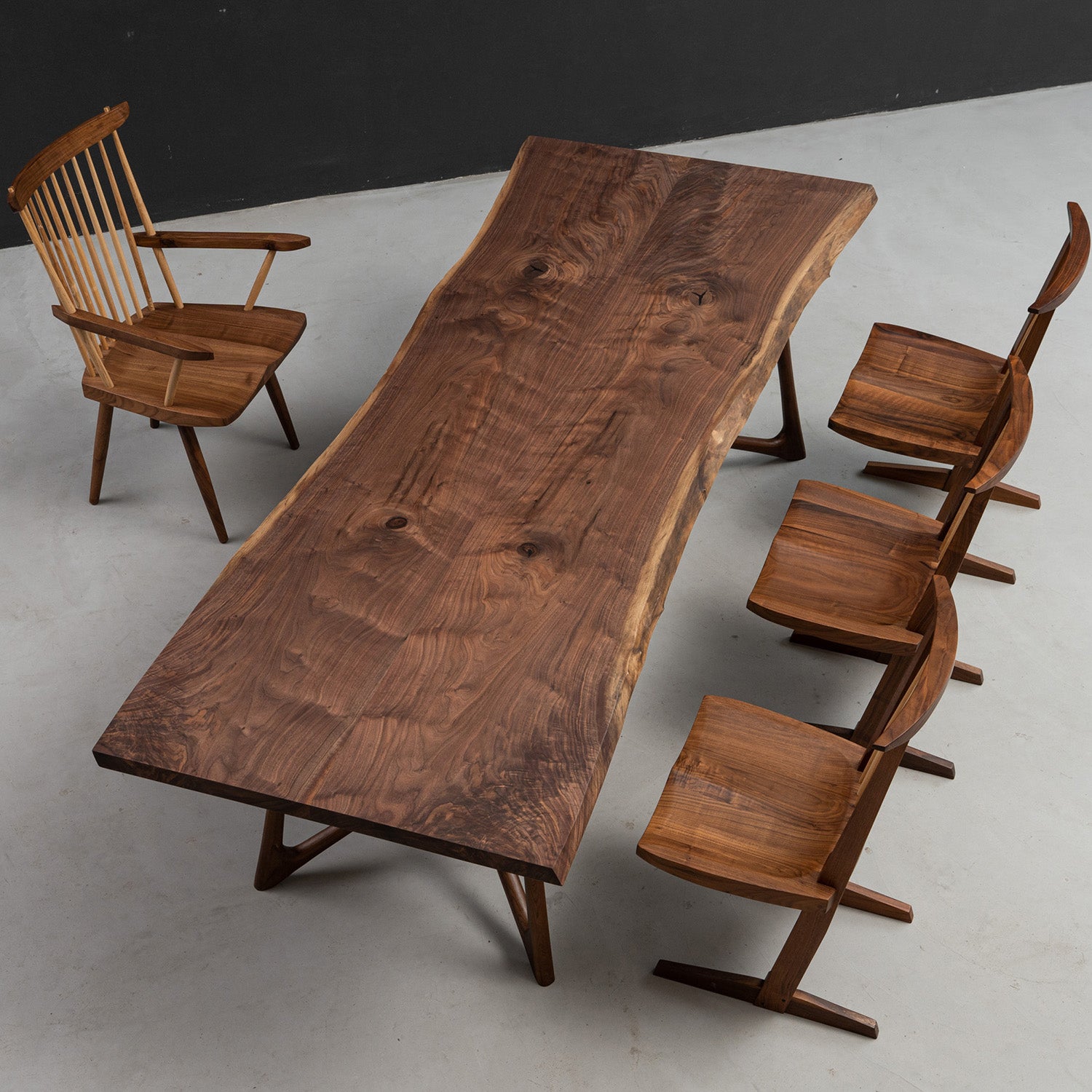
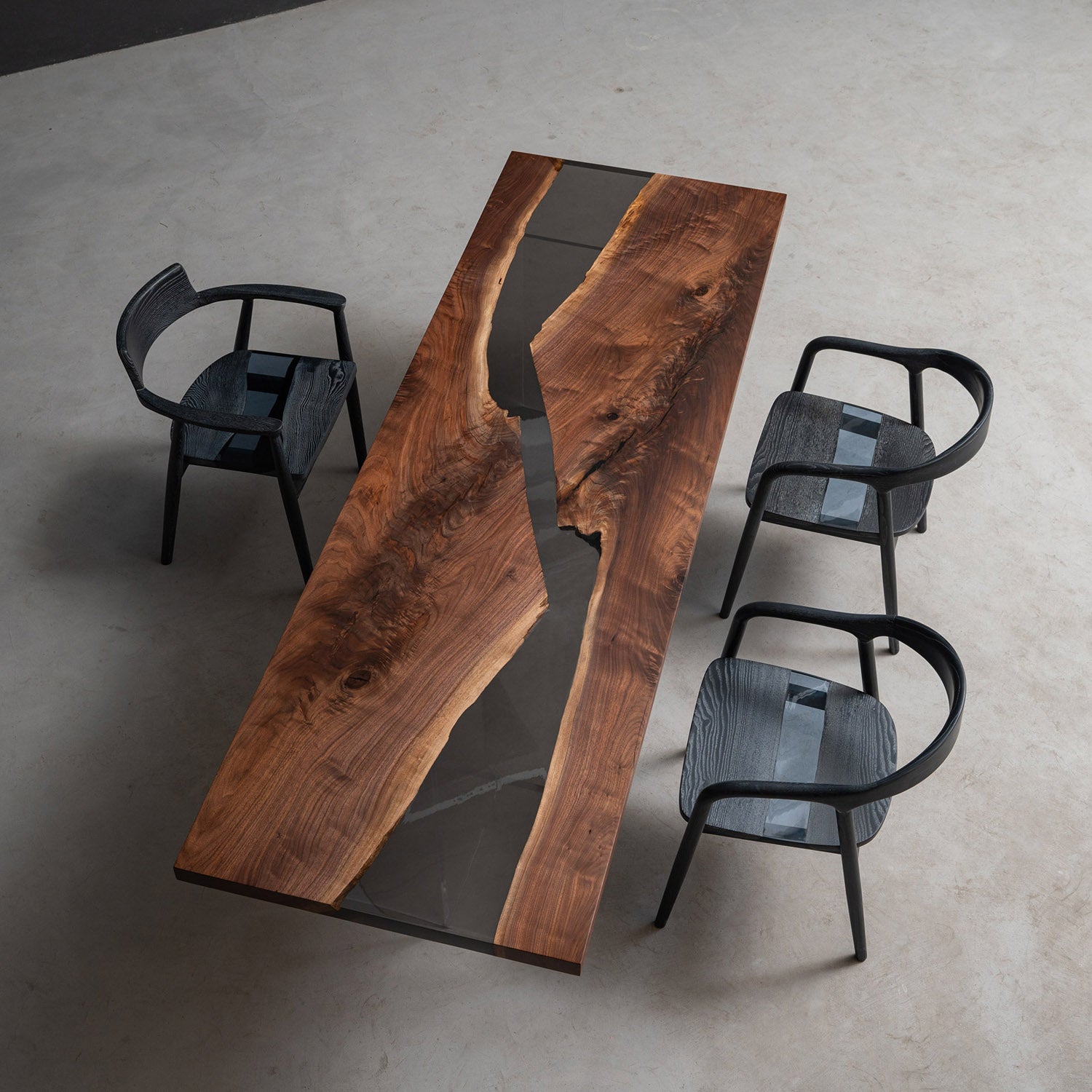
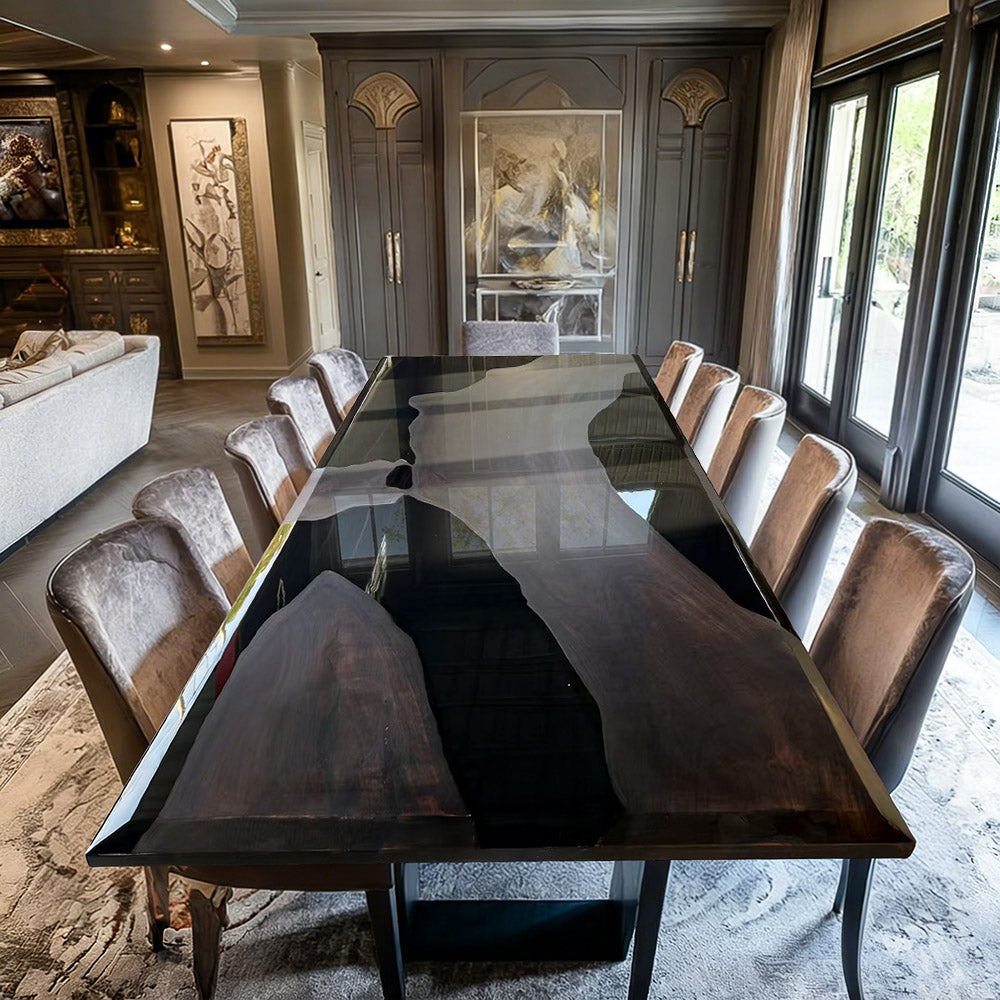

Walnut for classic elegance. Olive for bold character. Both are premium choices. Pick your favorite, and let’s build your custom resin river table.
Grain & Color Differences


- Overall Color Palette
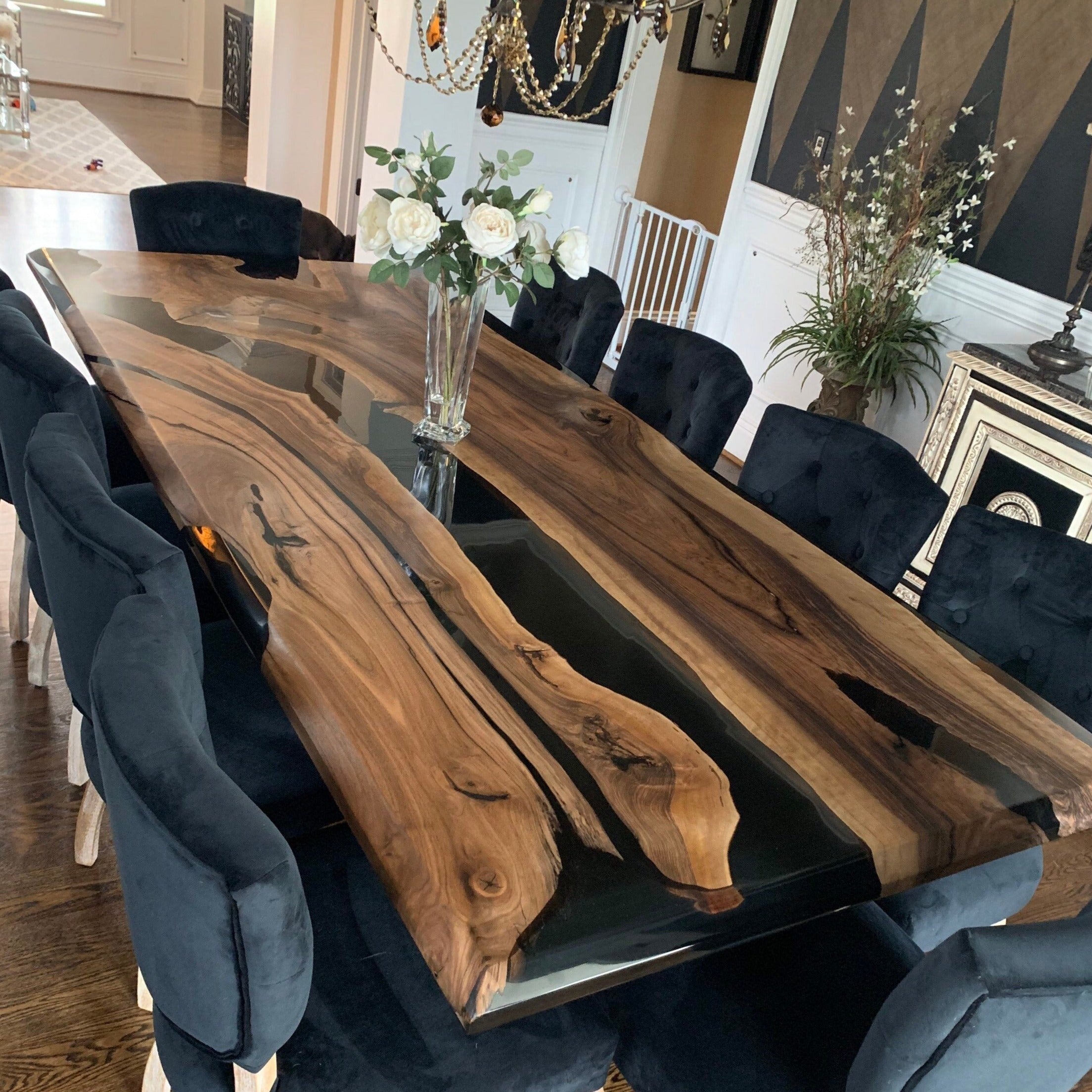
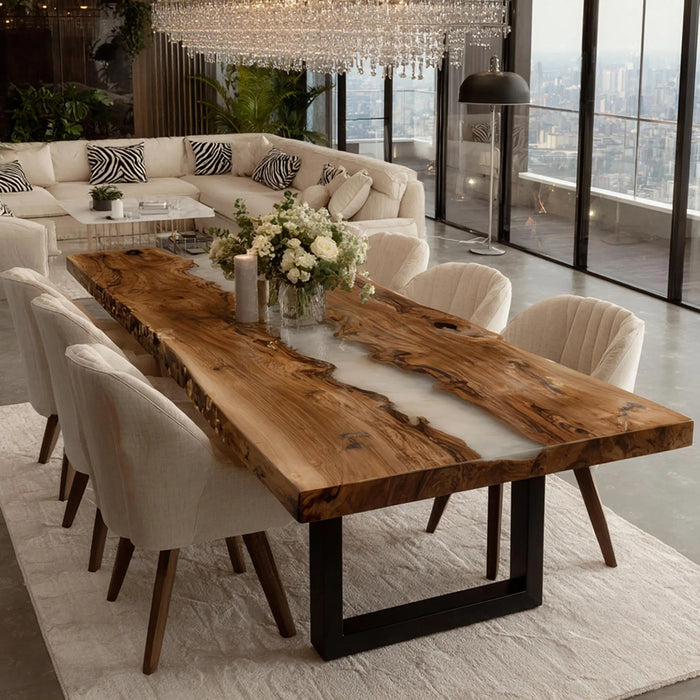
Walnut (light chocolate to espresso, with purple/gray hints and pale sapwood) is evenly colored and resin‑versatile. Olive (golden to amber, green/brown streaks that age‑darken) varies wildly per slab—risking clashes but stunning with clear or warm epoxies.
- Grain Flow & Figure
Walnut’s gentle, even grain keeps resin as the focus, while olive’s intense, interlocking swirls often require clear epoxy to let the wood’s unique character dominate.
- Chatoyance & Light Interaction
Walnut: even luster, uniform finishing. Olive: dramatic chatoyance and glow, but finish‑sensitive—oil darkens, water‑based poly keeps gold; test first.
- Visual Compatibility with Resin
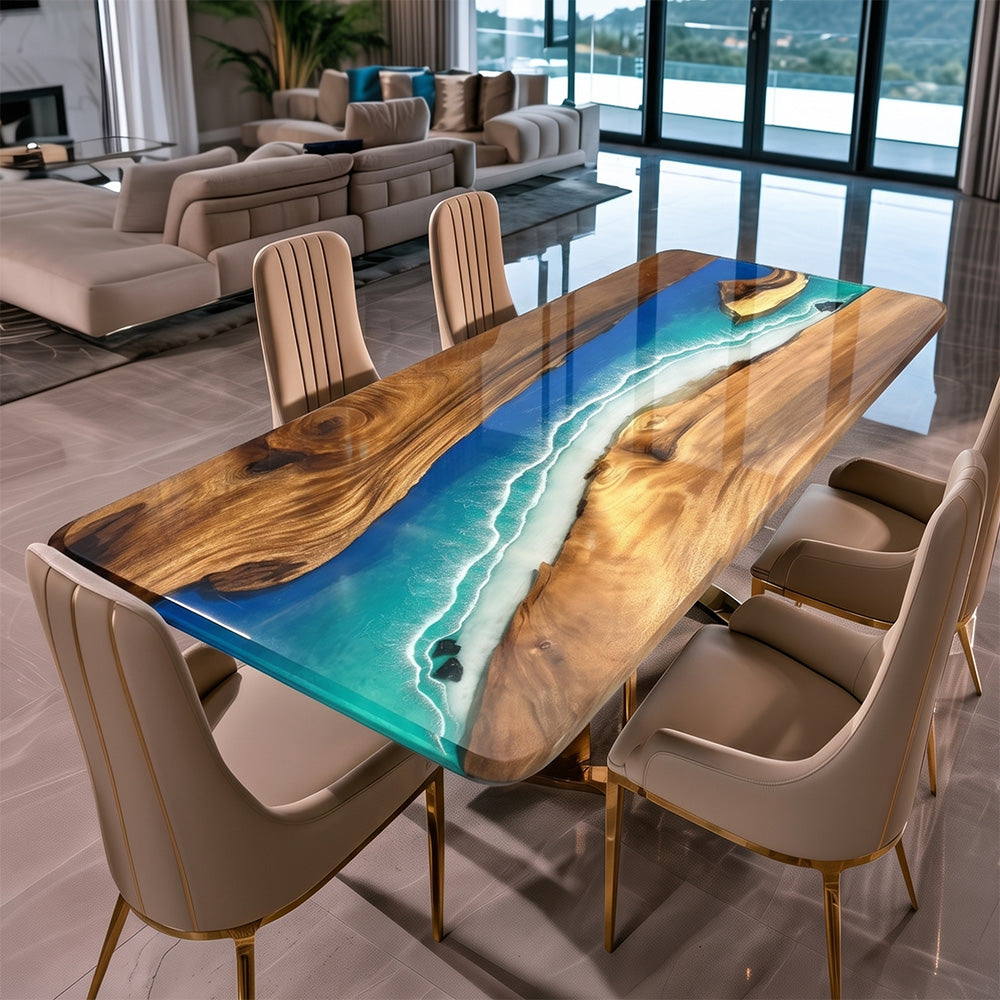
Walnut works with cool tones, metallics, and high‑contrast pigments cleanly; modern favorite. Olive prefers warm translucent resins (honey, amber, turquoise) to enhance its gold—opaque hides, clear mica is best; bold colors compete.
Durability & Stability Differences
Walnut: softer, lighter (~1,010 lbf, 38 lbs/ft³), stable, easy to work/finish. Olive: harder, heavier (1,500–1,700 lbf, 55–60 lbs/ft³), dent‑resistant but dulls tools, unstable (warp/check), needs long drying/remilling, difficult to finish (burns, requires dewaxing/water‑based). Both resist decay; olive better repels moisture/insects but hairline‑cracks (often decorative).

Cost & Availability Differences
Walnut: $8–12/bf, domestic, fast, high yield, low waste, easy repair. Olive: $20–40+, imported, 30–40% waste, carbide/stabilization needed, customs delays. Walnut = safe value; olive = collectible, higher resale, but repairs tough.

Walnut for classic elegance. Olive for bold character. Both are premium choices. Pick your favorite, and let’s build your custom resin river table.