
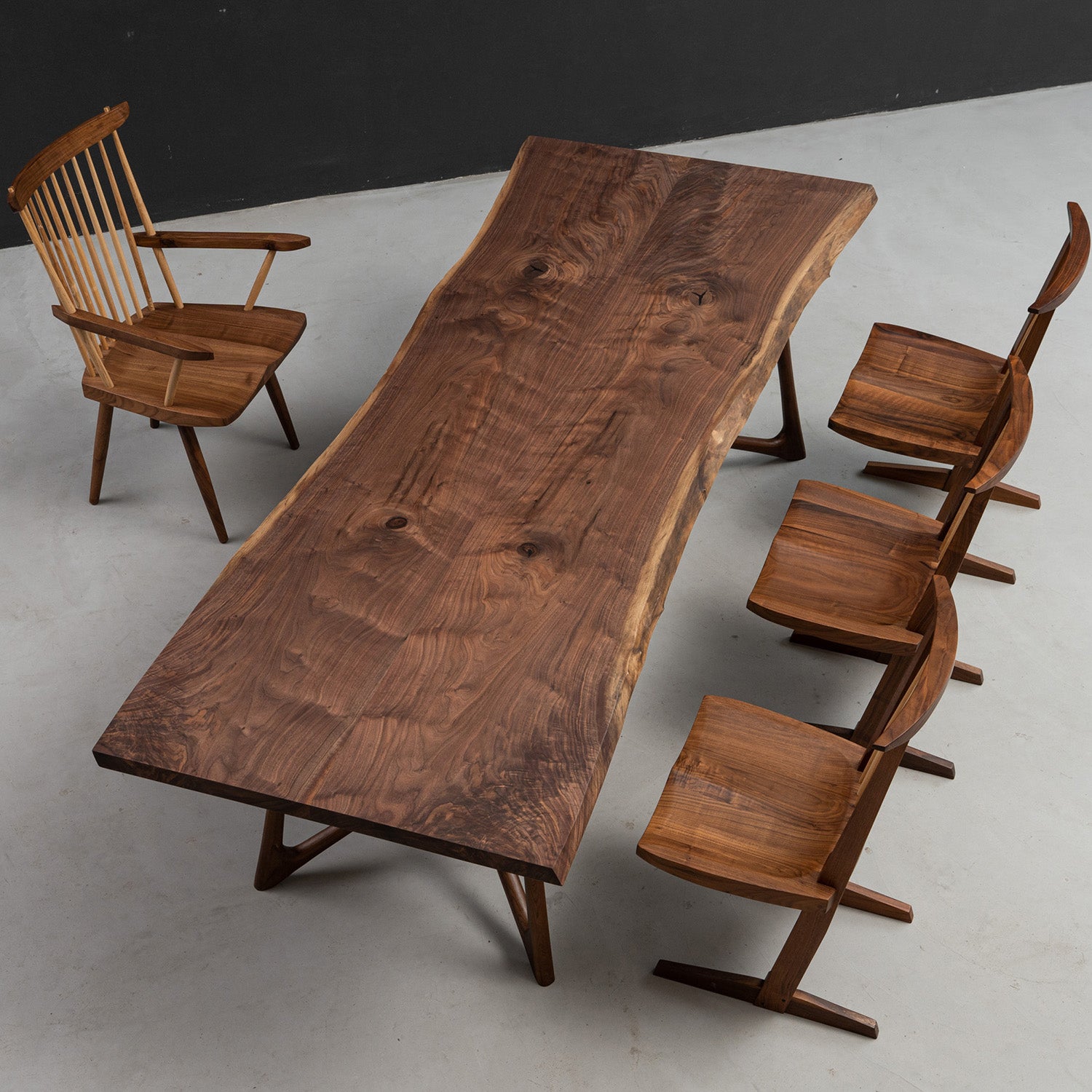
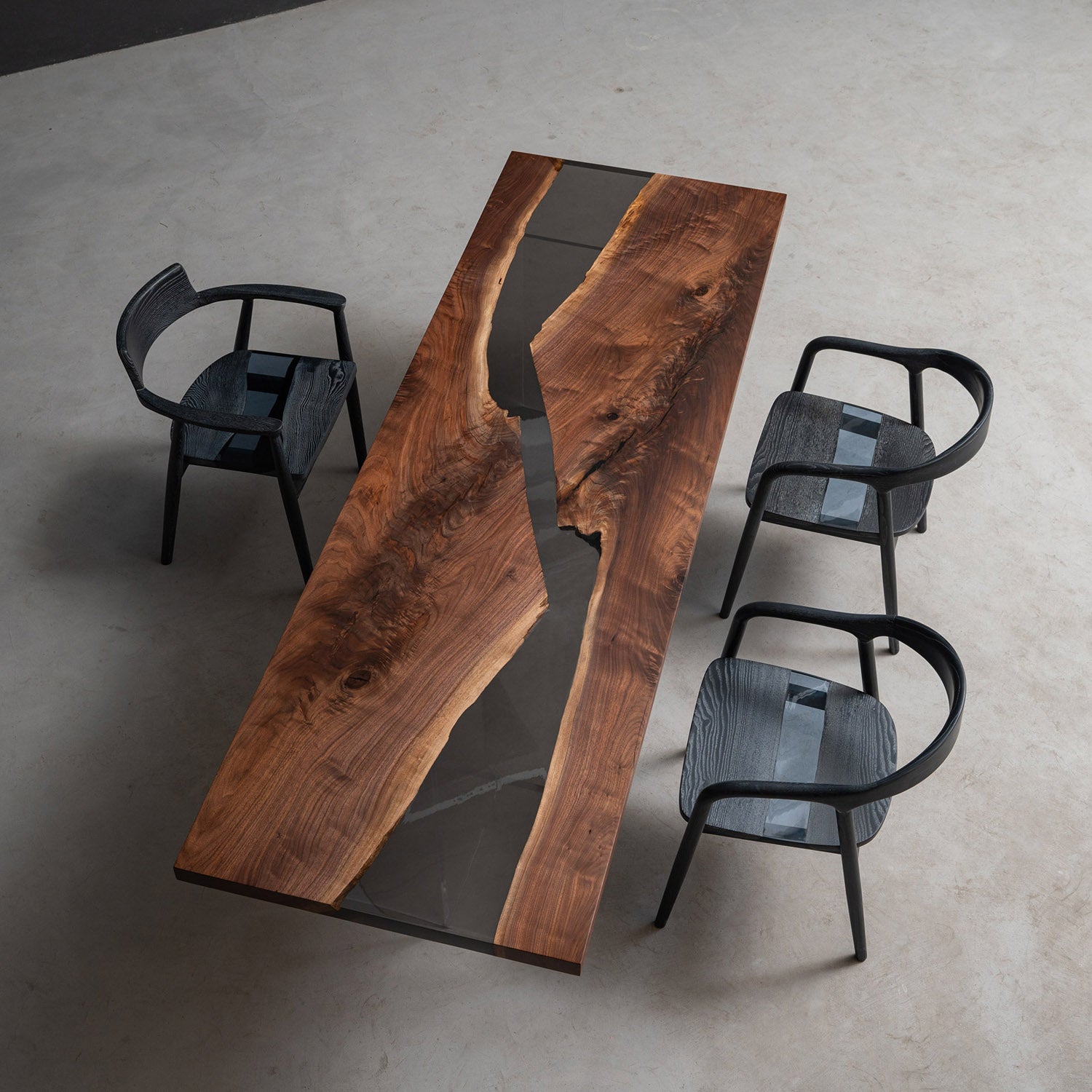
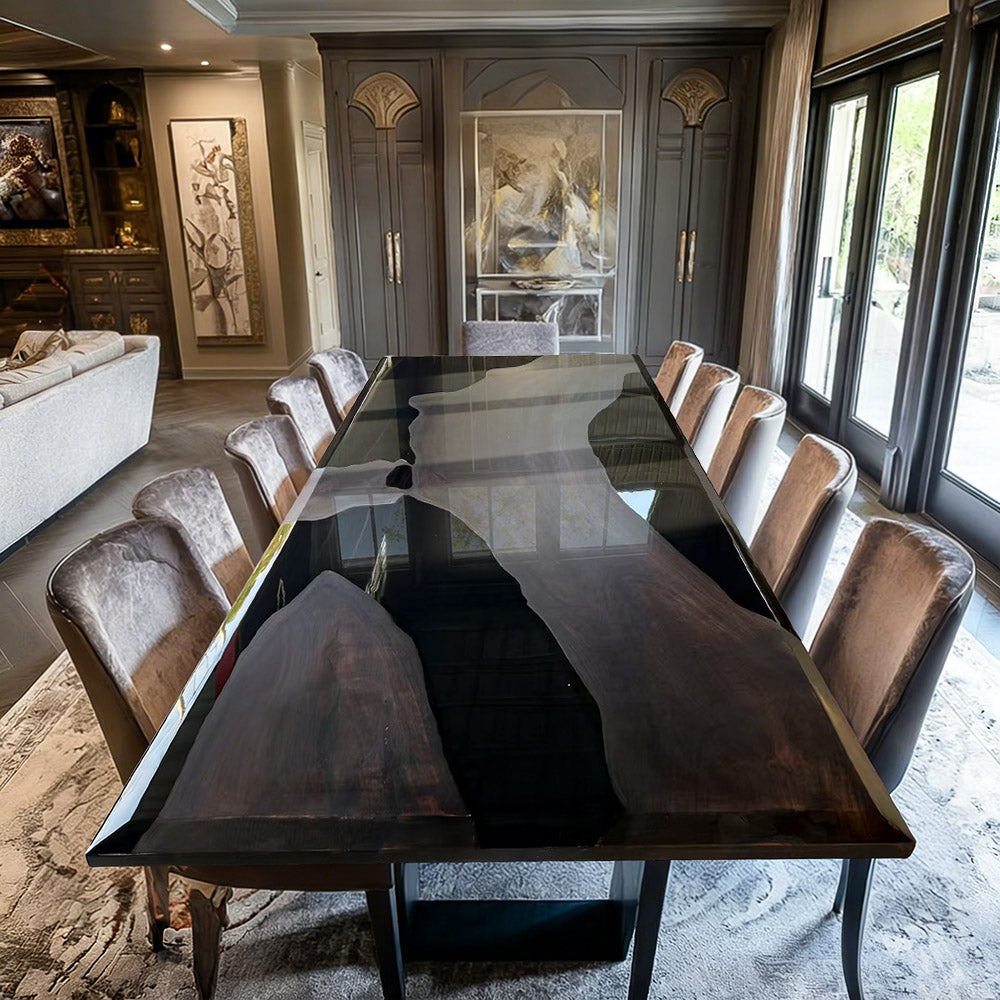

A custom epoxy table should last decades. Its stability hinges on how the wood was dried. This guide compares kiln‑ vs. air‑drying and explains why below 10% moisture is non‑negotiable.
Why Moisture Content Matters
Wood absorbs and releases moisture. Freshly cut wood can be over 100% MC. In a heated home, excess moisture causes warping, twisting, and cracking.
Furniture‑grade wood needs 6–10% MC—any higher and movement continues; any lower and it turns brittle.

What Is Air‑Drying?
Air‑drying is the oldest method: timber is cut, stacked with spacers for airflow, and left outdoors for months to years.
The Results
Final moisture content: Typically 12% to 18%. In humid climates, air‑drying alone rarely brings moisture below 15–18%.
- Time required: Months to years.
- Consistency: Limited by weather and ambient conditions.
Pros and Cons
Pros:
- Slow, even drying is kind to the wood's cellular structure
- Lower cost compared to kiln‑drying
- Fewer drying defects like checks and splits when done properly
Cons:
- Fails to meet indoor moisture standards.
- Wood movement continues indoors.
- Risk of pests and decay during drying.
- Unpredictable due to weather variability.

What Is Kiln‑Drying?
A regulated chamber with controlled temp, humidity, and airflow – turns months of drying into days or weeks.
The Results
Final moisture content: Typically 6% to 8% for interior hardwood furniture. In more humid regions or for some applications, you may see 8–10%.
- Time required: 1 day to 10 weeks, depending on species and thickness.
- Consistency: Precise and repeatable.
Pros and Cons
Pros:
- Single‑digit moisture for indoor stability.
- Reduces warping, shrinking, cracking.
- Heat eliminates pests and mold.
- Reliable epoxy bond.
- Even finish, smooth and rich.
Cons:
- Higher cost
- Improper drying can introduce internal stresses (case‑hardening)
- Requires skilled operation to avoid defects

Why Below 10% Moisture Is Non‑Negotiable for Epoxy Tables
Wood above 10% moisture will move—and inside rigid epoxy, movement means failure.
- Risk – Air‑dried/green wood pulls from resin, causing cracks and structural failure.
- Science – Indoor air is drier; wood needs 6–8% moisture (USDA standard) to stay warp‑free.
- Epoxy Factor – Kiln‑dried wood bonds reliably; excess moisture causes bubbles or separation—hence, kiln‑drying is mandatory.
What to Ask Before You Buy
- Kiln‑dried? – Accept only a clear yes; cheap tables skip this critical step.
Moisture content? – Must be below 10%; ideally 6–8%.
- Drying location? – Should be a professional kiln with controlled temperature and humidity.
- Acclimation? – Even kiln‑dried wood must be acclimated to the workshop before building.
When you invest in a custom epoxy resin table, you're not just buying a piece of furniture—you're buying a piece of art that should become part of your family's story. Don't let poor wood preparation ruin that investment.