

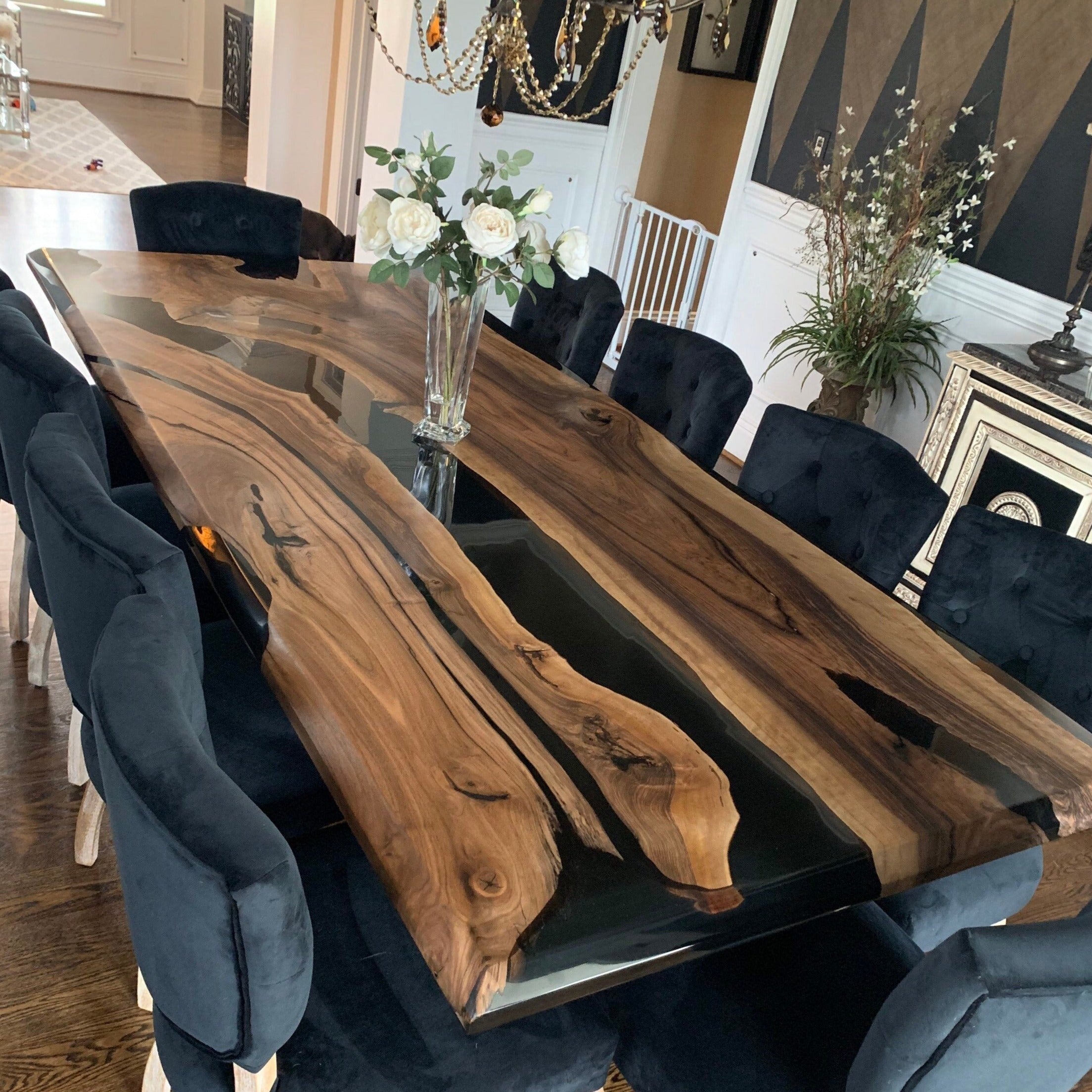


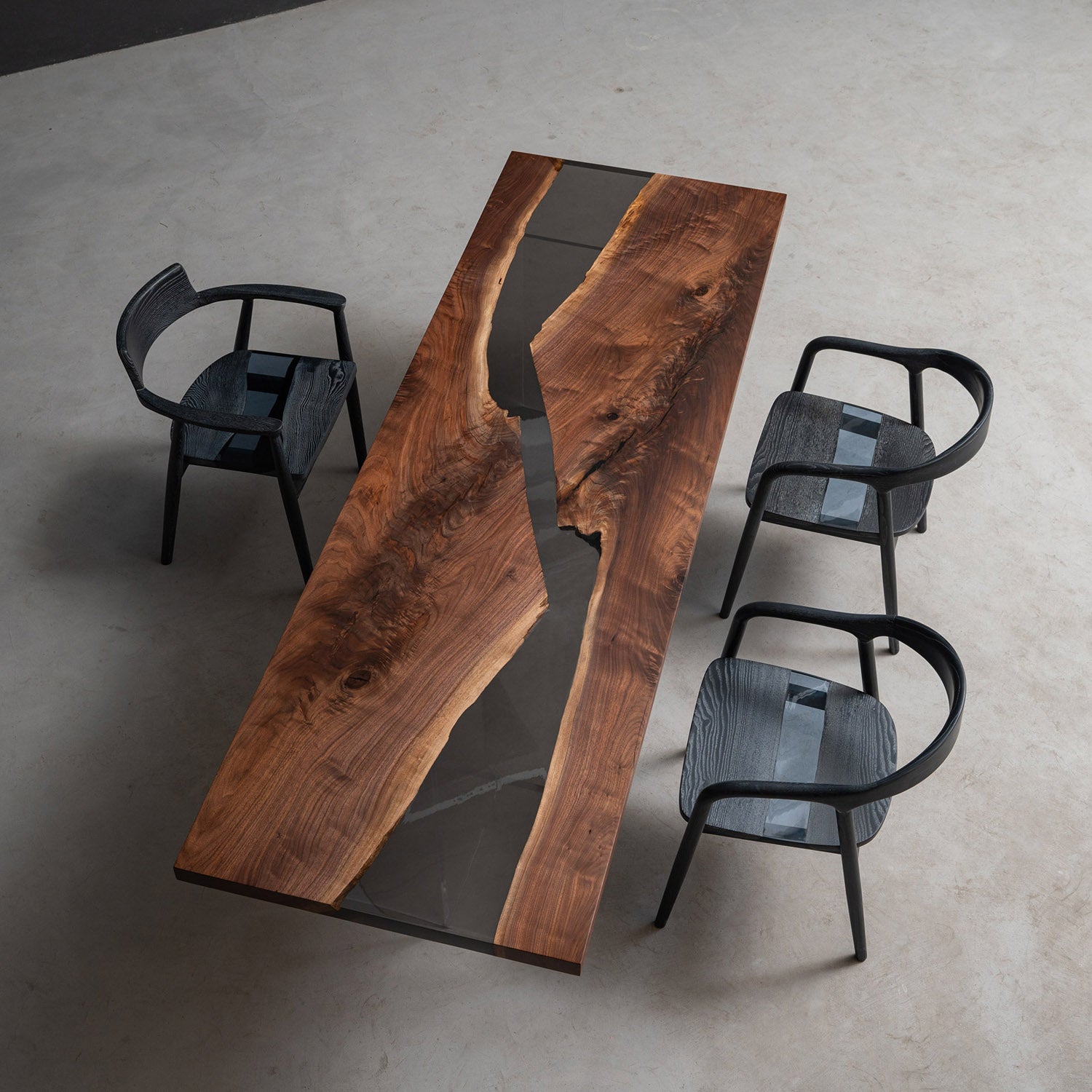


A custom epoxy table is a major investment—but it's worthless if it won't fit through your door. Too often, beautiful tables arrive only to get stuck, risking damage and ruining the day.
The good news? It's entirely preventable. With careful measuring, your solid wood epoxy table will arrive safely. This guide shows you how.
1. Start with the Furniture Itself
Before you measure anything in your home, you need to know the dimensions of your table. Here's what to measure:
- Width: The table's widest point
- Length: The table's longest side
- Height: From the floor to the top of the table
Diagonal depth: The diagonal measurement from the top corner to the opposite bottom corner—this is critical for moving through doorways when the table needs to be tilted

2. Map the Entire Delivery Route
Measure the entire delivery route—from truck to final spot—not just the destination room.
- The exterior/front doorway
- Every interior doorway along the path
- Hallways and corridors
- Staircases (if applicable)
- Elevators (if applicable)
- Tight corners or turns
- The destination room itself
Why this matters: The door may fit, but a narrow hallway turn can stop you. Measure every pinch point.

3. Various situations that may arise along the way
-
Measuring Doorways: The Critical Step
Check door clear width (inside frame) and height. If table width exceeds opening, tilt and verify diagonal depth.
Pro tip: don't forget the space after the door—turns are common trouble spots.
- Measuring Hallways: Width Isn't Everything
Check hall width/ceiling/archways/corners; stairs width/headroom/landing/railings/top-bottom; spiral turn diagonals.
Pro tip: turns need extra clearance—find the tightest spots.
- Don't Forget Elevators and Exterior Access
Measure elevator door, interior depth, and exterior entrance. Elevator doors have lower clearance—always measure.
Pro tip: Don't assume elevator doors match standard clearance—measure.

Handling unexpected situations and table protection
Reduce the footprint – Remove legs or hardware to shrink dimensions. Tilt the table diagonally; if its diagonal depth is less than the doorway height, it can be angled through.
Use tools and disassemble – Use furniture sliders, straps, or plywood ramps to ease movement over thresholds and stairs. If needed, separate the slab from its base.
Protect during transit – Wrap edges and corners with padded covers. Carry the slab vertically (not flat) to avoid cracking; tip sideways on stairs. When in doubt, hire professional movers.
A large custom wood epoxy resin table is a statement piece—a work of functional art that deserves to arrive in perfect condition. The secret to a stress-free delivery isn't luck; it's preparation.