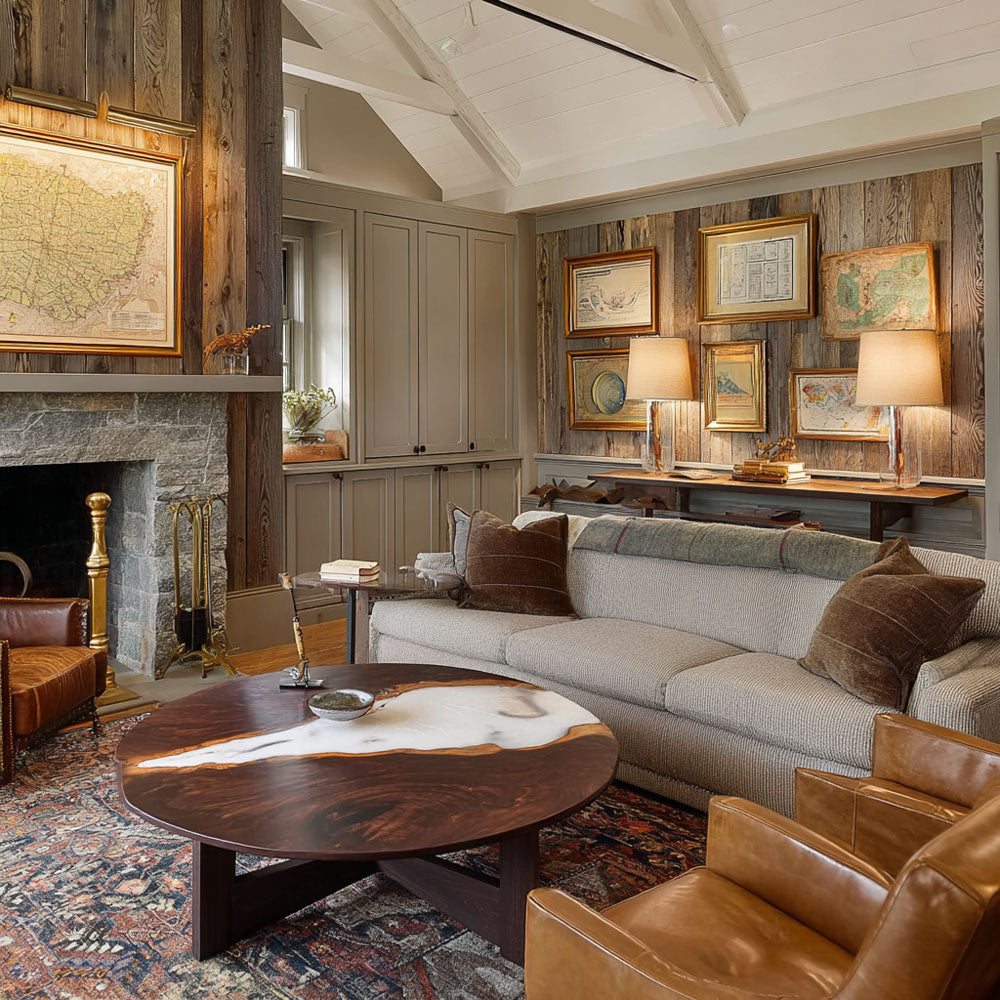


Clear epoxy is usually the better choice when your main goal is to make a small room feel more spacious. Transparency lets the live edges remain visible, reduces the appearance of a solid band across the tabletop, and can keep a pale or medium wood composition visually connected to the room around it. Dark epoxy creates stronger contrast and usually gives the table more visual weight. It can still work beautifully in a compact room, but it needs more help from daylight, restrained proportions, and visible floor area.
Visual Effect in a Small Room
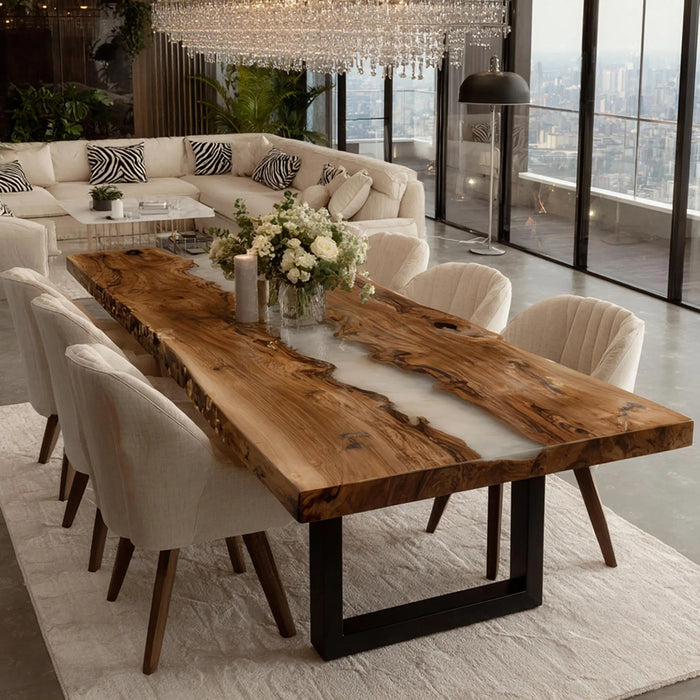
Clear epoxy makes the resin area read more like an opening between slabs than a separate block of color. The result is strongest when the resin is genuinely transparent, the slab edges are easy to see, and the base does not fill the space beneath the top. A Kazana poplar example shows how pale wood, clear resin, and transparent legs can keep the outline of the table visually light even when the top is substantial.

Dark epoxy does the opposite. A black or deep-colored river draws a firm line through the top and gives the eye a clear focal point. This does not change the room's physical size, but it can make the table feel more dominant. Research on room surfaces found that lighter walls and ceilings can increase perceived height, although the study did not test furniture or resin tables. That distinction matters: the evidence supports the general role of surface lightness, not a promise that one tabletop color will enlarge every room. See the Human Factors study on surface lightness and perceived room dimensions.

Daylight and Room Palette
Clear epoxy performs best when it has something bright to transmit or reflect. Place the table near a window, use an uncluttered rug or visible floor beneath it, and keep nearby walls and large upholstery from becoming uniformly dark. Clear resin will not create daylight, but it can avoid adding another opaque area to a room that already has limited light. In the olive wood example below, open resin areas reveal the floor and chair shapes through the tabletop, so the natural slabs remain the strongest visual feature.

Dark epoxy works better in a small room when the surrounding palette gives it breathing room. White or light walls, a bright window, pale flooring, and a narrow dark river can keep the contrast intentional rather than heavy. Repeating a small amount of black in the chairs or light fixture can also make the resin feel connected to the room instead of isolated. The dark table should be the main anchor, not one of several competing dark objects.

Table Proportion and Floor Visibility
Resin color cannot correct an oversized table. In a compact dining area, the finished length and width, chair clearance, traffic path, and base position affect comfort before color does. A clear resin top can still feel crowded if chairs press against walls or the base blocks movement. The most reliable sequence is to choose the footprint first, then compare clear and dark resin within the same approved slab layout. Kazana's small-space epoxy table guide provides related examples of round, oval, narrow, and low-profile designs.

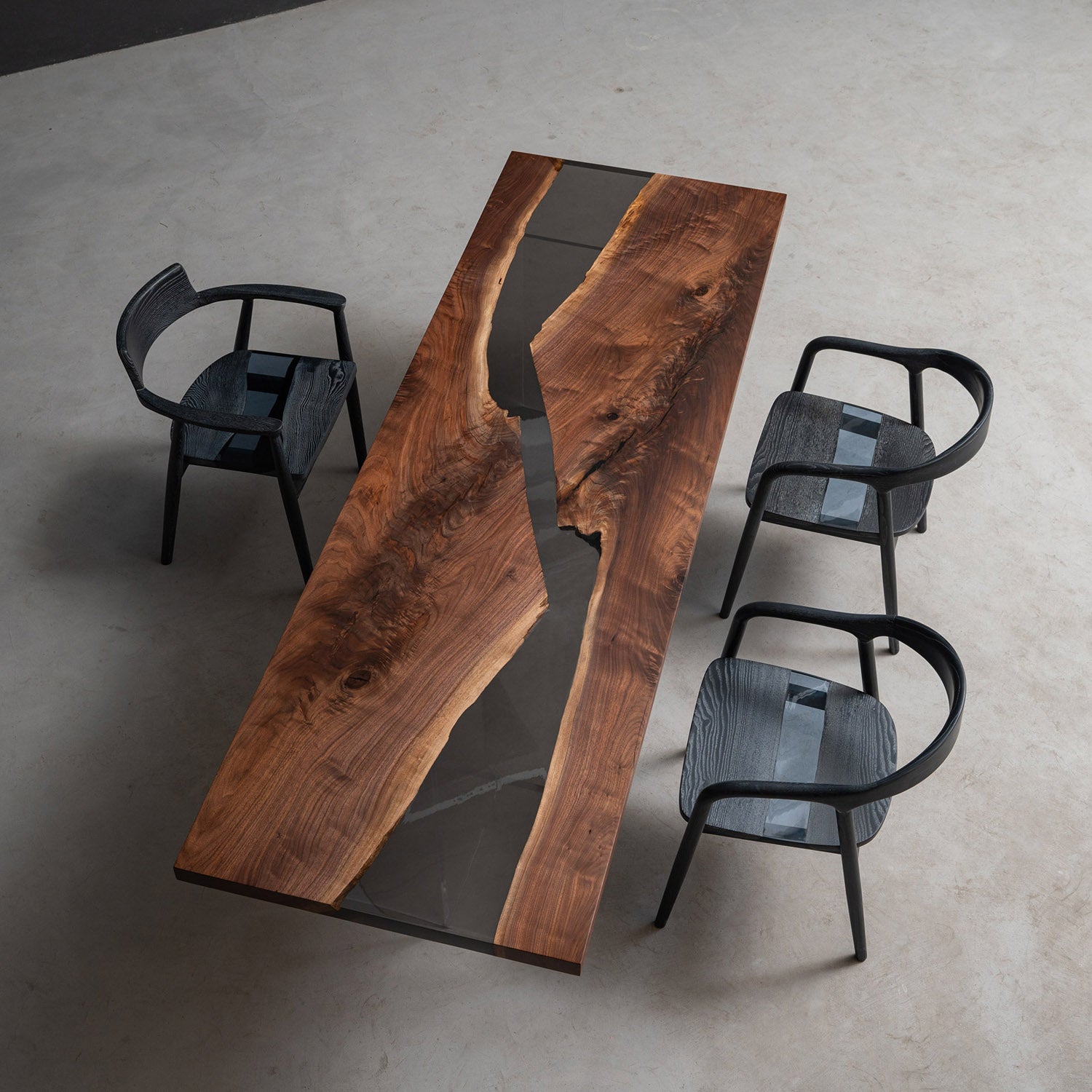
Visible floor makes both options feel lighter. Slim legs, an open base, and rounded or gently tapered corners reduce the number of solid shapes the eye has to process. A pale wood table with a light blue translucent river demonstrates this principle: the restrained color and open base keep the composition airy. If you prefer dark epoxy, use the same layout discipline and keep the opaque resin area narrower when possible.

Wood Pairing and Finish
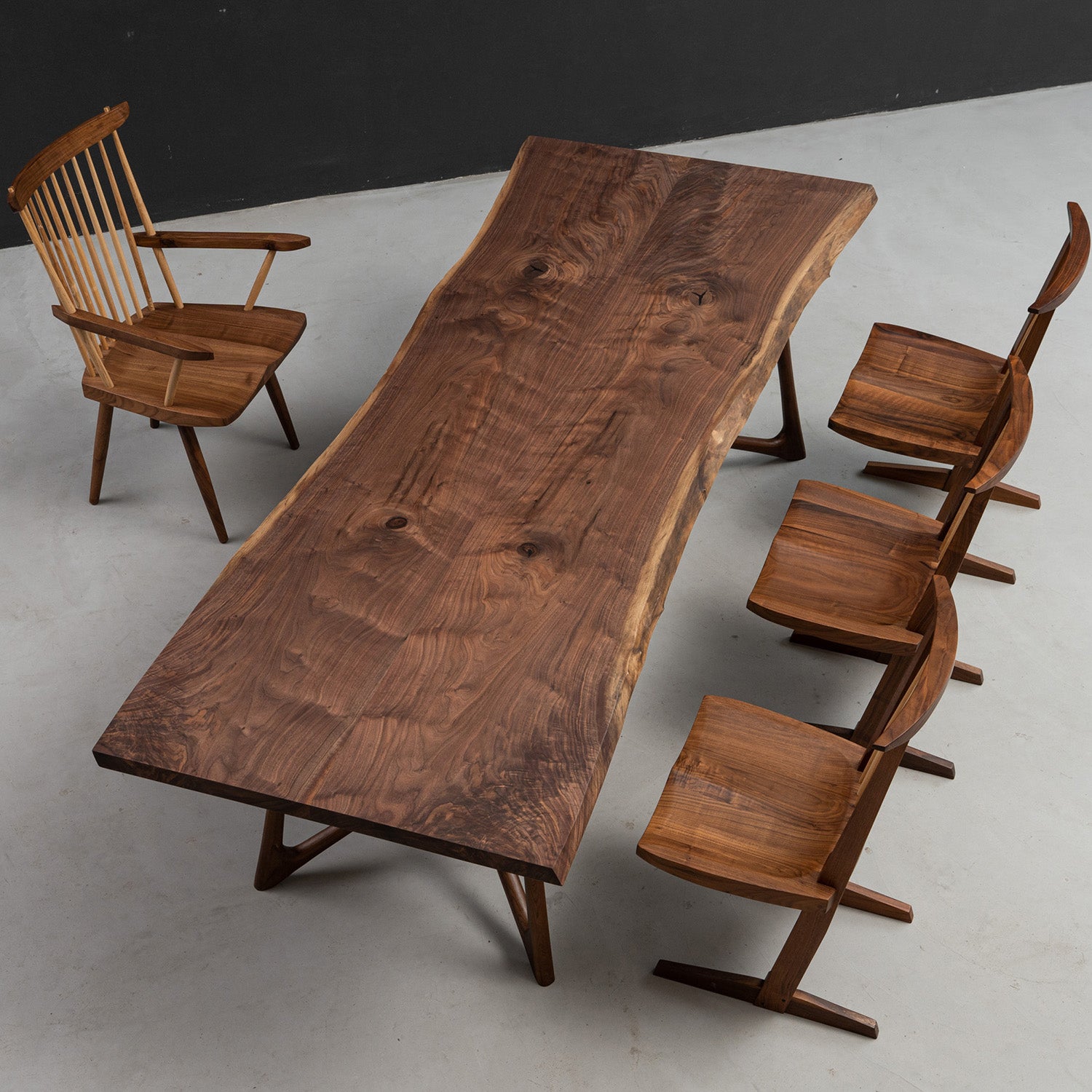
Wood color changes the result as much as resin color. Clear epoxy paired with ash, poplar, or a lighter olive slab usually gives a small room the lowest visual weight because the wood and resin both preserve brightness. Clear resin with black walnut can still feel open, but the walnut remains a dark element. Conversely, dark epoxy paired with black walnut creates a concentrated, graphic composition, while the same resin with pale wood produces sharper contrast.

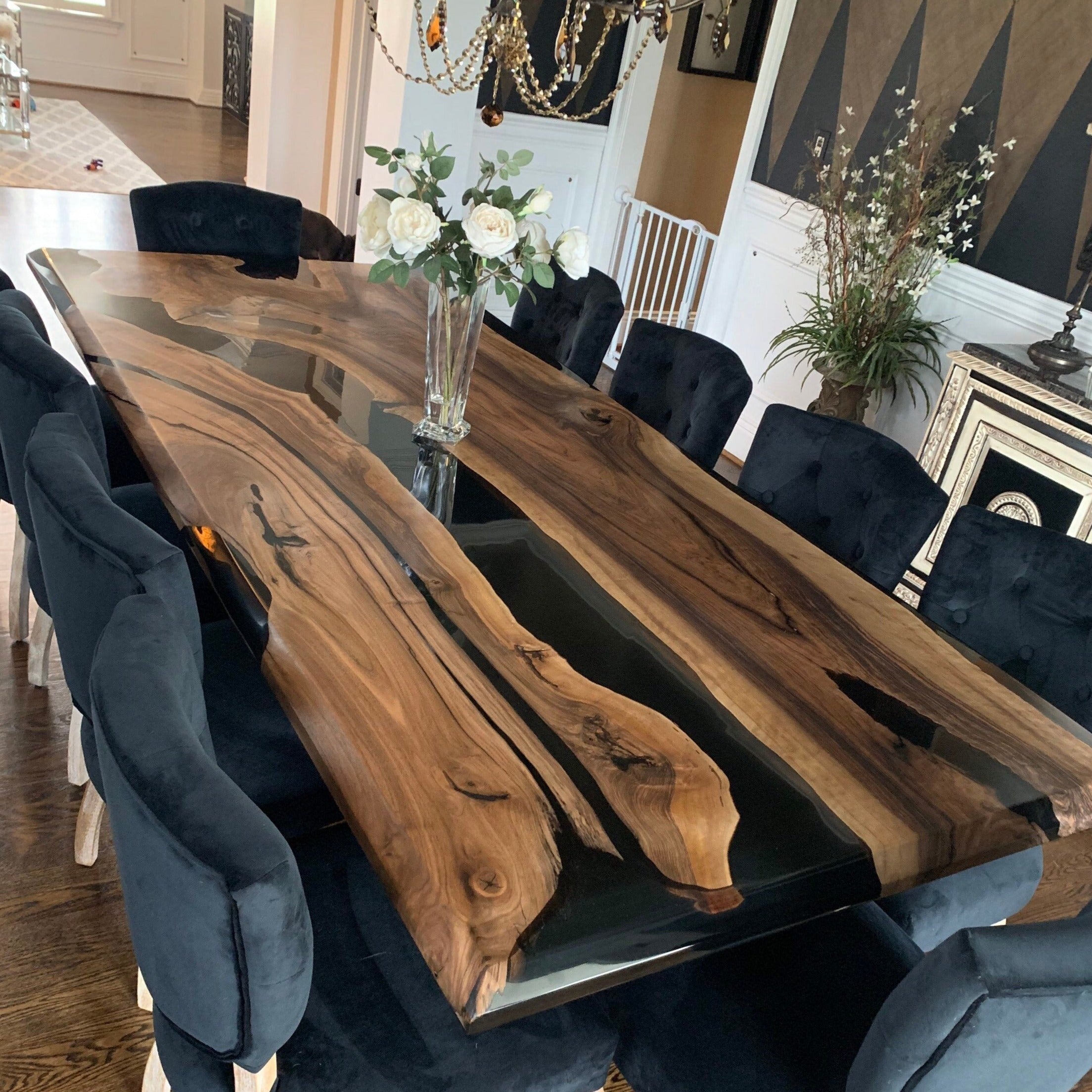
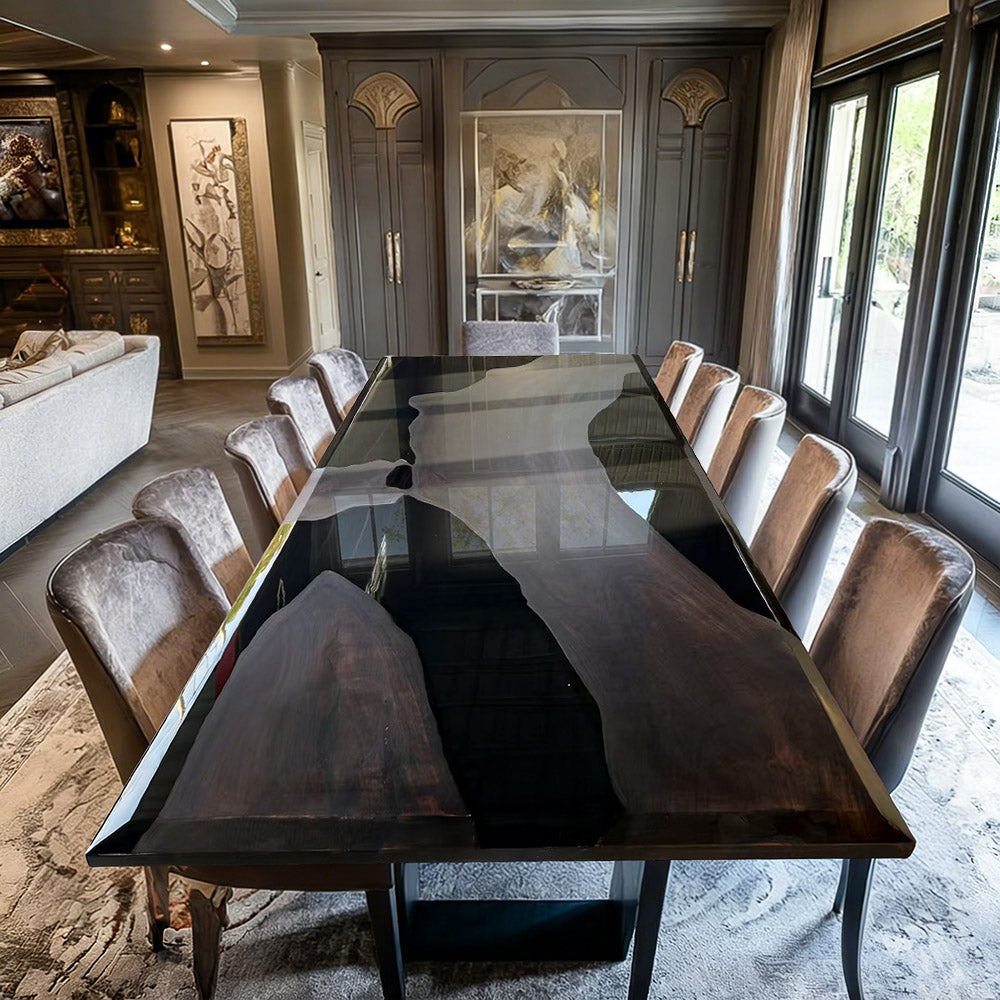
Finish also changes how the tabletop behaves under light. A glossy clear river produces stronger reflections and makes depth easier to see, but bright fixtures and windows may appear as distinct highlights. A dark glossy river can look almost mirror-like and may become more noticeable at night under direct overhead lighting. Review the resin color and sheen in the room's daytime and evening light before approving the final direction. The black walnut example below shows how a broad dark river becomes a dominant part of the composition even in a bright interior.

How to Choose
Choose clear epoxy when the room is small, daylight is limited, the floor or rug is light, and you want the live edges to remain visually continuous. It is the safer choice for an airy result, especially with lighter wood and an open base. Clear resin also suits rooms where the grain should be the main feature rather than the resin color.
Choose dark epoxy when you want the table to serve as a deliberate focal point and the room already has enough light around it. Keep the footprint disciplined, leave floor visible, and compare the width of the dark river against the full tabletop rather than judging a small color swatch alone. For a broader style comparison, see Kazana's light resin and dark resin table guide.
The practical answer is clear: clear epoxy usually makes a small room feel more spacious, while dark epoxy creates more contrast and visual presence. If you are deciding between the two, review both options on the same slab layout and under the lighting conditions in your room. When you are ready to compare designs, start with Kazana's custom epoxy table page and specify your room dimensions, preferred wood, resin transparency, and base style.